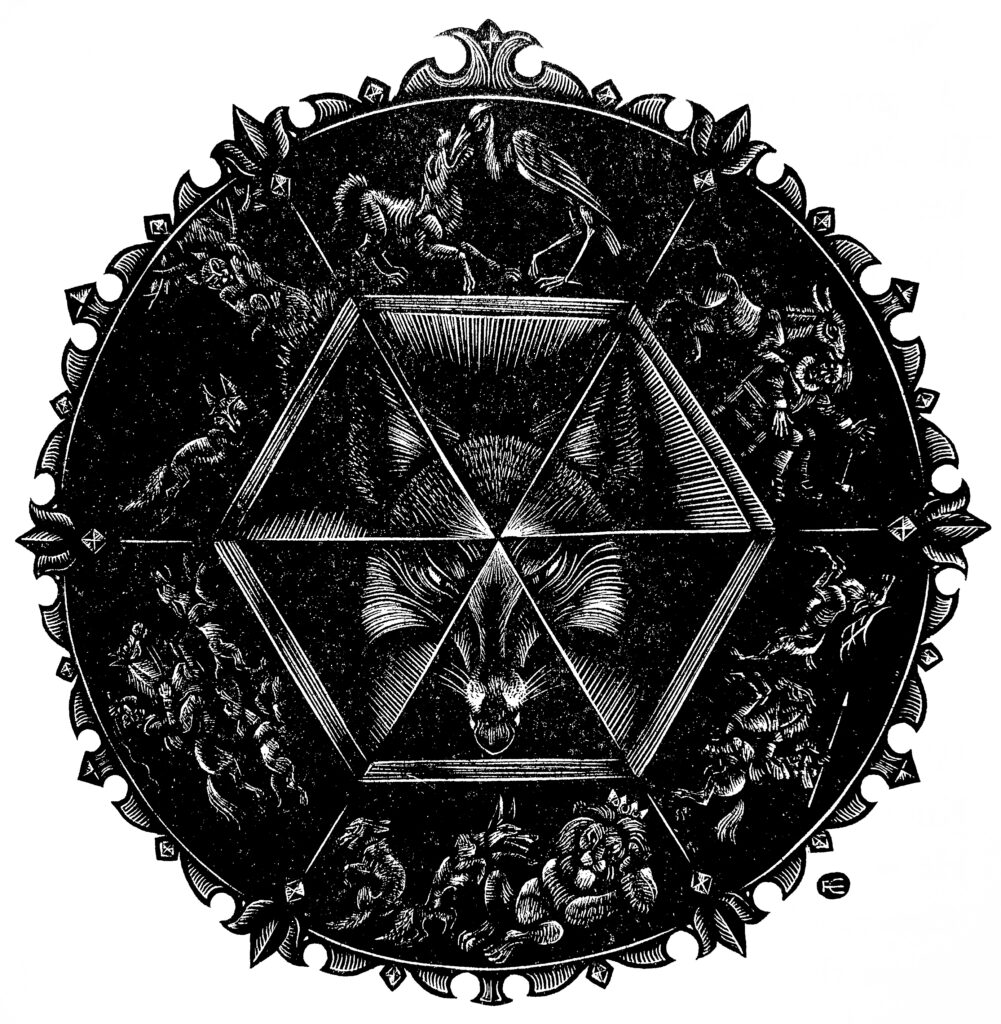
Illustration from
Johann Wolfgang von Goethe
Fritz Eichenberg (illustrations)
The Story of Renard the Fox
The Heritage Press (New York; USA)
I
Thorsten Soltau
›Fabella (The Original Reyneke Demos)‹
Label: Audio. Visuals. Atmosphere.
released 2019 (composed 2015)
Format: CS | 55 copies
II
Max Kuiper & Thorsten Soltau
›Animi Sub Volpe Latentes‹
Label: Chondritic Sound
released 2016
Format: CS | 100 copies
III
Max Kuiper & Thorsten Soltau
›Vox Catuli‹
Label: Sentimental Productions
released 2018
Format: CS / CS box set | 50 copies
IV
Chanteclin ɛt Chantecler
›Within Sacred Circles‹
Label: I Shall Sing Until My Land Is Free
released 2025 (composed 2019-2024)
Format: digital | unlimited
Preface
The Reynke series (2015 to present) comprises four works developed by Max Kuiper and Thorsten Soltau over ten years.
Chapter I
Classifiable as somewhere between drone and musique concrète, the works refer to the medieval world of fables and the spaces and moods found there. The reference to Reynke Fuchs in the title is intended as an umbrella term for the works, inspired by the concept behind the original recordings for ›Fabella‹.
Made in 2015 and primarily featuring harpsichord and piano, continue to serve as the common thread running through the series. Fragments and sequences of these pieces, conceived as demos, can be found in all chapters published to date.
›Animi Sub Volpe Latentes‹ established an approach that has been expanded upon and continues to this day, and which can be traced back to Max Kuiper’s special connection to the Middle Ages.
Max Kuiper sees his contribution to the project primarily as an opportunity to acoustically depict certain places, moods and/or mental states from the Middle Ages:
The music lends itself to interpretation, but these four works on ›Animi Sub Volpe Latentes‹/›Vox Catuli‹ can be thought of as books, adventures, walks, abstract pilgrimages or a mental process.
The segments can be considered as pages, types of light, stages of many kinds, or a poetic soundtrack to a fable, offering a number of atmospheres and enigmatic locations, such as an open summer field, the cold crypt of a church, a pond in a monastery garden or the smells of a medieval hospital.
These are cinematic, layered soundscapes that combine images and texts like medieval pages.
Calligraphy: writing as a form of drawing. Images that tell stories.
My contribution is based on the desire to deconstruct stereotypical ideas about the Middle Ages and to discover the secrets and meanings hidden in the darkness of this period.
The sound works attempt to open new or fresh ways of relating to history.
Listeners can create their own stories from the sound works.
Max Kuiper, April 2025
Chapter II
With one exception, all contributions to the series are studio recordings.
Max Kuiper mixed the albums ›Animi Sub Volpe Latentes‹ and ›Vox Catuli‹. His four-decade mastery of concrete sounds and sound collages proved instrumental in this endeavour. Max Kuiper also used carefully selected and coordinated instrumentation for the works.
These additions are special in that they form a bridge to the medieval approach of the recordings through their specific character: some of Kuiper’s recordings were made in museum spaces and historical locations.
Chapter III
The piece ›Within Sacred Circles‹, created between 2019 and 2024, plays a special role in the series.
Unlike previous albums, the two pieces consist of two live recordings performed in Max Kuiper’s studio.
The material generated during the collaboration was selected and edited by both artists, who then supplemented it with additional overdubs created especially for the project. Thorsten Soltau was responsible for the final mix.
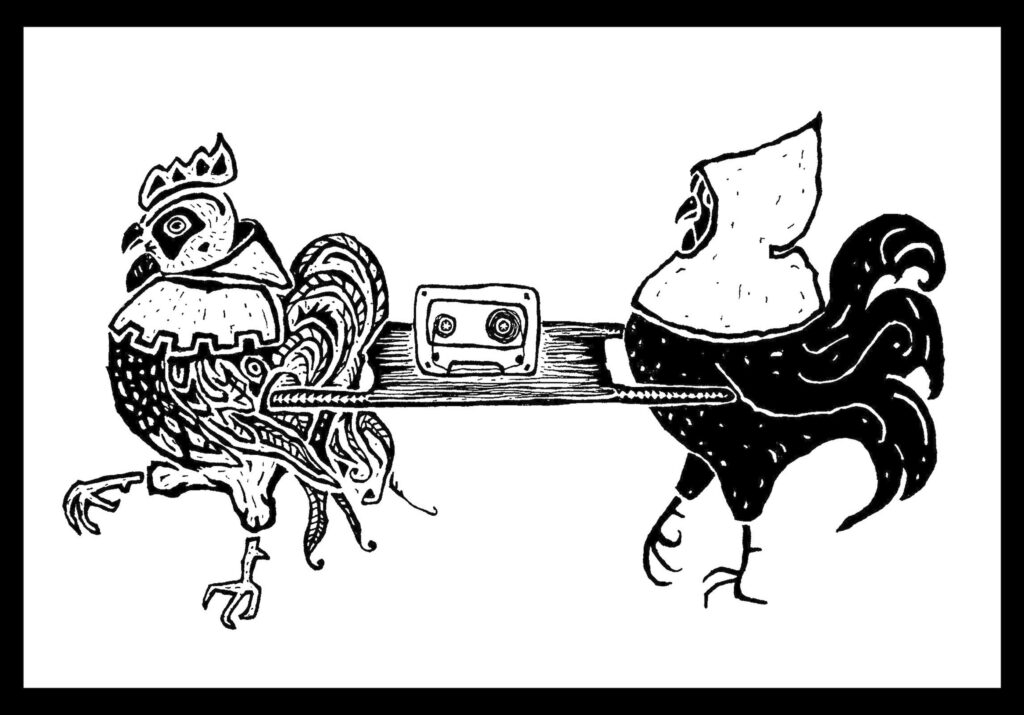
The work was also published under the name Chanteclin ɛt Chantecler. This refers to the chickens that feature in the French epic fable Roman de Renart:
Max Kuiper has a background in visual art, having studied at art school, as well as in sound.
He has realised international exhibitions combining sound and visual works, created a number of multimedia installations, performed sound pieces accompanied by video and released sound projects on various labels.
He also curates a small art gallery and organises events as part of a Dutch sound collective.
Thorsten Soltau is a self-taught sound artist and designer who has been working in the field since 2005.
He participates in international exhibitions, working both solo and as part of groups. His primary interests lie in exploring anthropomorphism and (spiritual) duality.
His music combines elements of Neue Klassik, drone as well as musique concrète.